
How to Choose the Right Payroll Schedule: Weekly, Biweekly, Semimonthly, or Monthly
Compare weekly, biweekly, semimonthly, and monthly payroll schedules to understand how each works and what employers should consider when choosing a schedule.
 Charles Hardy
 Updated on Sep 30, 2026
 15 min read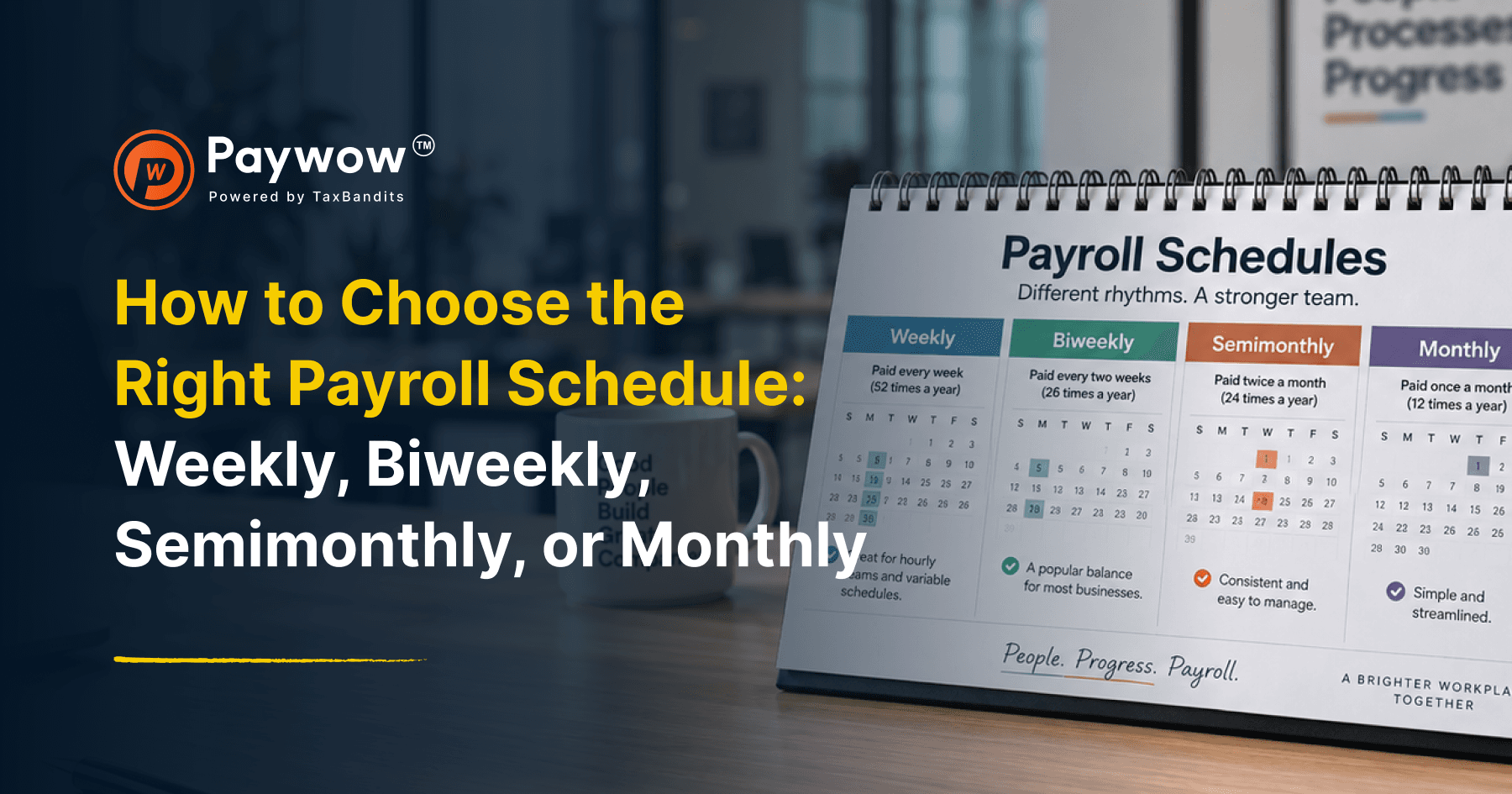
Scannable summary
Key Takeaways
- Understand the four common payroll schedules: weekly, biweekly, semimonthly, and monthly.
- Consider state pay frequency laws before choosing a payroll schedule for your employees.
- Choose a schedule based on employee needs, administrative workload, cash flow, and overtime requirements.
- You can use different pay schedules for different employee groups, as long as they comply with applicable laws.
- Changing a payroll schedule later can affect employee expectations and payroll administration, so choose your schedule carefully when setting up payroll.
The pay schedule you choose on day one of running payroll tends to stick around for years, since changing it later means renegotiating expectations with every employee you have. It’s worth getting right the first time.
A payroll schedule determines how often employees are paid, and the four standard options are weekly, biweekly, semimonthly, and monthly, each with different pay period counts, cash flow implications, and state-level requirements. Here’s how to choose between them.
The four standard payroll schedules
|
Schedule |
Pay periods per year |
Typical pay day |
Best suited for |
|---|---|---|---|
|
Weekly |
52 |
Same day every week |
Hourly workers, construction, retail |
|
Biweekly |
26 |
Every other week, same weekday |
Most small and mid-sized businesses |
|
Semimonthly |
24 |
Twice a month, fixed dates (e.g., 15th and last day) |
Salaried employees |
|
Monthly |
12 |
Once a month, fixed date |
Executives, some contractors |
Weekly pay
Employees are paid every week, resulting in 52 pay periods a year. This schedule is common in industries with hourly, variable-hour workers, since it keeps cash flow tight between paycheck and time worked, which matters for employees living paycheck to paycheck.
The tradeoff is administrative. Running payroll 52 times a year means 52 opportunities for errors, and significantly more processing time than a less frequent schedule.
Biweekly pay
Employees are paid every two weeks on a fixed weekday, resulting in 26 pay periods a year. This is the most common schedule among small and mid-sized U.S. businesses, since it balances reasonable processing frequency with manageable cash flow predictability for employees.
Biweekly schedules occasionally produce a three-paycheck month, twice a year, which employees should be told to expect, since it can otherwise look like a payroll error.
Semimonthly pay
Employees are paid twice a month on fixed calendar dates, typically the 15th and the last day of the month, resulting in 24 pay periods a year. This schedule is common for salaried employees, since the fixed dates simplify budgeting for benefits deductions and other recurring costs.
The complexity here shows up around overtime. Since semimonthly pay periods don’t align cleanly with the workweek used to calculate FLSA overtime, employers need to calculate overtime based on the actual workweek, not the semimonthly period, which takes more careful tracking than biweekly schedules.
Monthly pay
Employees are paid once a month, resulting in 12 pay periods a year. This is the least common schedule for hourly or lower-income employees, since it requires a full month of budgeting between paychecks, but it’s still used for some salaried executives or contractors.

What actually determines the right choice
State law. Some states legally require at least a biweekly or semimonthly schedule for most employees. Check your state’s labor department before choosing monthly or even weekly pay, since requirements vary significantly.
Employee expectations. Hourly and lower-wage employees generally prefer more frequent pay, since it reduces the gap between work and payment. Salaried employees are typically less sensitive to this.
Administrative capacity. More frequent pay periods mean more processing time, more opportunities for error, and, if you’re using a payroll service that charges per pay run, higher costs.
Overtime complexity. Weekly and biweekly schedules align cleanly with the FLSA workweek used for overtime calculations. Semimonthly and monthly schedules require extra care to calculate overtime correctly, since pay periods don’t map directly onto workweeks.
Can you run different schedules for different employee groups
Yes. It’s common for businesses to pay hourly employees biweekly while paying salaried staff semimonthly. This is legal in most states, as long as each group is treated consistently and the schedule meets any applicable state minimum frequency requirement.
Changing your schedule later
Switching pay schedules is possible but disruptive, since it usually creates one irregular transition period where employees are paid on an unfamiliar timeline. If you’re setting up payroll for the first time, it’s worth choosing deliberately rather than defaulting to whatever feels easiest to set up, since undoing that choice later costs more in employee confusion than it saves in initial convenience.
The right schedule balances what your state requires, what your employees expect, and how much processing capacity your business actually has. Get it right at the start, and it’s one decision you won’t need to revisit.
Whichever schedule you choose, PayWow runs it without adding to your workload. Weekly, biweekly, semimonthly, or monthly, PayWow supports every pay frequency and keeps your filings aligned to it automatically.
Related Blogs